The Night Out Reimagined: Inside Birmingham's Alcohol-Free Venues That Are Rewriting the Rules
The Night Out Reimagined: Inside Birmingham's Alcohol-Free Venues That Are Rewriting the Rules
There's a moment, usually around eleven on a Friday, when most Birmingham venues hit their stride. The music lifts, the crowd loosens up, and the bar queue stretches three deep. For years, that loosening up was assumed to be chemical — a pint here, a cocktail there, the whole ritual of social drinking doing the heavy lifting. But spend a night in the city's growing alcohol-free spaces and something quietly radical becomes obvious: the atmosphere was never really about the booze.
Birmingham's sober social scene has moved well past the stage of being a niche concern. It's no longer just about designated drivers awkwardly nursing a Diet Coke, or people in early recovery trying to navigate spaces that weren't built with them in mind. What's emerging now is something altogether more intentional — venues, events, and communities designed from the ground up around the idea that a great night out doesn't require alcohol at all.
More Than Mocktails
The easy story to tell here would be about mocktails. About clever bartenders replacing spirits with shrubs and adaptogens, about menus full of zero-proof alternatives that almost, nearly, sort of taste like the real thing. And yes, that's part of it. Birmingham's better bars have genuinely raised their game on the non-alcoholic front — you can find properly considered alcohol-free lists across the city now, from Digbeth to the Jewellery Quarter, that treat sober drinkers as actual customers rather than an afterthought.
But the more interesting shift is happening at venues that have removed alcohol from the equation entirely. Not as a gimmick, not as a temporary pop-up concept, but as a full-throated statement about what socialising can look like when you take drinking out of the centre of it.
The owners of these spaces talk about it in strikingly similar terms. The word that comes up again and again is clarity — not in a preachy, wellness-industry way, but in the straightforward sense that conversations go deeper, connections feel more genuine, and the night itself becomes something you actually remember the next morning. One regular at a Moseley-based sober social club described it like this: "I used to think I needed a drink to feel comfortable in a room full of strangers. Turns out I just needed a room where everyone was in the same boat."
Who's Actually Showing Up
Forget the assumption that alcohol-free venues are filled exclusively with people in recovery or hardcore wellness devotees. The crowds turning up to Birmingham's dry spaces are genuinely diverse — and that's precisely what makes them interesting.
You've got the sober-curious, a demographic that's grown significantly among younger Brummies who've watched the health content, done the dry months, and started asking why they ever went back. You've got parents who want a proper social life without the two-day hangover that now apparently follows even a modest Friday session. You've got shift workers, athletes, people on medication, Muslims observing their faith, and plenty of people who simply find that they enjoy nights out more when they're not drinking.
What unites them isn't abstinence as an ideology. It's the desire for the full experience of a night out — the music, the conversation, the sense of occasion, the feeling of being somewhere that matters — without the alcohol attached to it. The sober social scene, at its best, delivers exactly that.
The Spaces Making It Work
Across Birmingham, a handful of venues and events have become genuine anchors for this community. Some are permanent, some are monthly fixtures, and some exist as roaming nights that take over mainstream bars for an evening and transform them entirely.
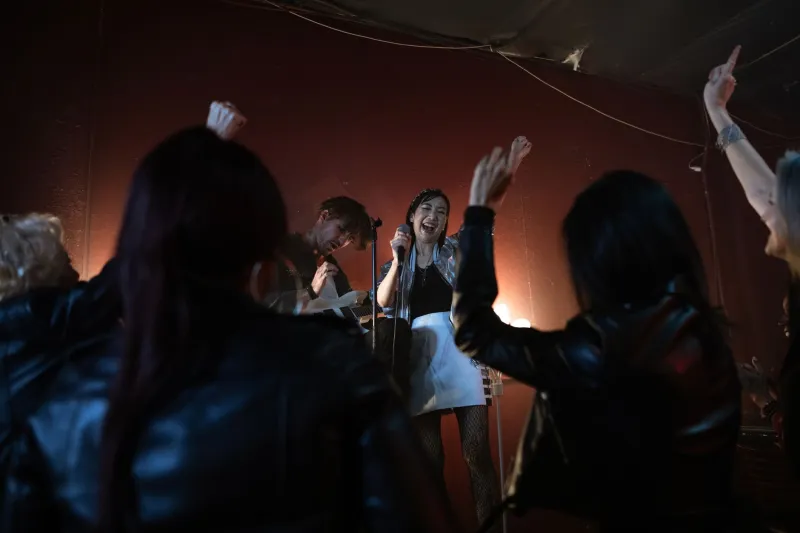
In Digbeth, the creative quarter that's always been ahead of the curve on this kind of thing, alcohol-free events have become a regular feature of the weekend calendar rather than a curiosity. The same warehouse spaces that host club nights and art openings have started hosting sober socials that run on the same energy — good sound, interesting lighting, a crowd that's genuinely there to have a good time. The absence of a bar queue, several regulars have noted, means you actually spend the night talking to people.
In Balsall Heath and Moseley, community-rooted sober spaces have been quietly building loyal followings for a couple of years now. These are less about nightlife spectacle and more about the kind of easy, regular socialising that used to happen in the pub — except without the pressure to drink, without the round-buying ritual, and without the Sunday morning regret. Tea, quality soft drinks, the occasional spectacular alcohol-free cocktail, and a room full of people who are genuinely glad to be there.
The Jewellery Quarter, meanwhile, has seen several of its more progressive bars begin to host dedicated alcohol-free evenings that have pulled in crowds their owners clearly didn't expect. One bar manager told us, with obvious surprise, that their monthly sober night had become one of their busiest evenings — not just in headcount, but in atmosphere. "People stay longer," he said. "They're not rushing to catch the last tram before they've had too many. They're just... enjoying it."
Why It Feels Different
Spend time in these spaces and you start to understand what's actually being built here. It's not a lesser version of a conventional night out. It's a different kind of social experience — one that tends to be louder in conversation, more open to strangers, and oddly more energetic than you might expect from a room full of sober people.
There's something about the removal of alcohol's social scaffolding that forces a different kind of engagement. You can't lean on the drink to smooth over awkwardness, so the awkwardness either gets addressed or it disappears faster than it would in a boozy setting. People make eye contact. They finish their sentences. They remember what you said.
For a city like Birmingham — diverse, communal, genuinely proud of its social culture — that feels like something worth paying attention to. The sober scene isn't anti-pub, anti-club, or anti-fun. It's just asking a question that the city is increasingly willing to answer: what if the night out was always really about the people in the room?
The Bigger Picture
Birmingham has always been a city that does things its own way. It didn't follow London's nightlife trends so much as develop its own, and the alcohol-free movement here has that same quality — it's not imported from a lifestyle magazine or a wellness influencer's feed. It's grown out of real communities, real needs, and a genuine appetite for social spaces that feel inclusive in the fullest sense of the word.
The venues leading this aren't asking anyone to give up drinking. They're just making the case — pretty convincingly, it turns out — that the best nights out were never really about that in the first place.
Next time you're planning a Friday, it might be worth finding out what's on at one of them. You might be surprised what a night out feels like when you wake up the next morning and actually remember all of it.