Postcodes With Personality: How Birmingham's Creative Quarters Are Reinventing the Night Out
Postcodes With Personality: How Birmingham's Creative Quarters Are Reinventing the Night Out
There's a version of a Birmingham night out that hasn't changed much in twenty years. You know the one. Broad Street. Queues. Overpriced cocktails in a venue that could be anywhere in any British city. It does the job. It's fine. But fine isn't really what Birmingham is about anymore — and if you've spent any time recently in Digbeth or the Jewellery Quarter after dark, you already know that.
These aren't just neighbourhoods with a few decent bars bolted on. They're fully-formed nighttime ecosystems, each with their own crowd, their own aesthetic, their own unspoken rules about what a good evening looks like. And increasingly, they're where Birmingham's most interesting cultural life is actually happening.
Digbeth: The Warehouse That Never Sleeps
Digbeth has always had edge. Even before the artists moved in, before the murals went up and the independent venues started colonising old factory units, there was something about this part of the city that felt a little apart from everything else. Industrial, a bit raw, stubbornly itself.
That quality didn't disappear when Digbeth became cool — and it hasn't disappeared now that the word "regeneration" gets thrown around with alarming frequency. What's kept it real is the venues themselves, many of which are run by people who genuinely give a damn about what they're building.
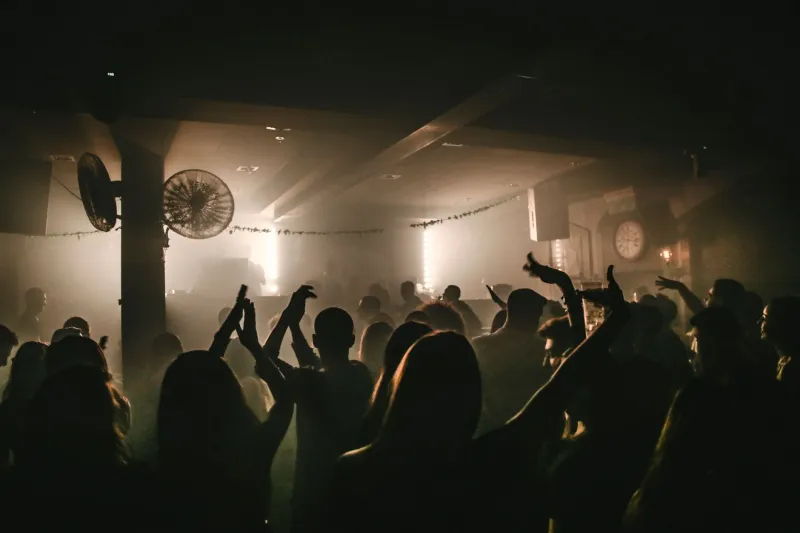
The Custard Factory remains the spiritual heart of it all — a sprawling creative complex that hosts everything from club nights to gallery openings to markets that spill out into the courtyard on a Sunday afternoon. But Digbeth's nighttime energy extends well beyond its most famous postcode landmark. The railway arches that line the area have become incubators for some of the city's most interesting independent operators: small cocktail bars where the owner is usually behind the bar, intimate gig venues where the sound system is taken more seriously than the decor, spaces that blur the line between art installation and drinking establishment in ways that feel genuinely experimental rather than gimmicky.
"Digbeth gives you permission to try things," says one venue owner who's been running a small arts bar in the area for four years. "There's an audience here that's genuinely curious. They'll come out on a Tuesday for something weird. They'll give you a chance."
That appetite for the unconventional shapes what nights out look like here. You're as likely to end up watching a short film screening in a converted loading bay as you are dancing to a DJ set. The crowd skews younger and more arts-adjacent, but it's not exclusionary — there's a warmth to Digbeth's scene that its reputation for cool doesn't always suggest.
The Gentrification Question Nobody Wants to Ignore
It would be dishonest to write about Digbeth's creative scene without acknowledging the tension sitting underneath it. Property developers have noticed what artists and venue operators built here, and the area is changing fast. Rents are rising. Some of the smaller, scrappier spaces that gave Digbeth its character have already closed or been priced out. The same story has played out in creative districts across the UK — Shoreditch, Hackney Wick, the Northern Quarter in Manchester — and Birmingham isn't immune.
The people who've been here longest are clear-eyed about it. "We've already lost places that mattered," says a local artist and regular on the Digbeth scene. "You hope the soul survives the development, but you can't just assume it will. You have to keep supporting the independent stuff, or it goes."
It's a real tension, and it doesn't have a tidy resolution. What it does do is give the grassroots venues that remain a kind of urgency — a sense that what they're doing matters and that showing up for it matters too.
The Jewellery Quarter: Independent Bars and After-Dark Craft
Cross the city and you find something quite different. The Jewellery Quarter — Birmingham's historic centre of gold and silversmithing, a neighbourhood that wears its heritage with quiet confidence — has undergone its own remarkable transformation after dark.
Where Digbeth is warehouse energy and arts-world cool, the JQ (as regulars call it) has developed something more intimate. The streets here are narrow and human-scaled, the buildings Victorian and ornate, and the bar scene that's grown up around them reflects that character. This is a neighbourhood for lingering. For the kind of night that starts with a drink at six and somehow turns into three in the morning without anyone quite noticing.
The independent bar boom here has been genuinely impressive. Natural wine bars, craft beer taprooms, cocktail spots run by bartenders who've clearly spent time thinking about what they're doing — all of them operating at a scale that keeps things personal. You bump into the person who made your drink at the end of the bar. You get into a conversation with the table next to you because the room is small enough that it feels natural.
"The JQ crowd is a bit older, a bit more local," says one bar manager who opened her venue here three years ago. "They're not chasing the next big thing. They want somewhere they can actually talk, somewhere that feels like it belongs to the neighbourhood."
That sense of belonging is key. The Jewellery Quarter's nighttime identity feels earned rather than manufactured — a product of independent operators who chose this postcode because they believed in it, not because a property developer told them it was the next hot area.
Two Districts, One City, Endless Nights
What's striking about both Digbeth and the Jewellery Quarter is how completely they've developed on their own terms. Neither is trying to be the city centre. Neither is trying to be the other. They've each found their own frequency, attracted their own communities, and built nighttime cultures that feel genuinely irreplaceable.
That's rarer than it sounds. Plenty of cities have creative neighbourhoods that are really just branding exercises — areas that look interesting on a map but feel hollow when you actually turn up on a Friday night. Birmingham's creative districts don't feel hollow. They feel lived-in, contested, evolving, and very much alive.
The challenge — and it's a real one — is keeping them that way as the city grows and the money follows the energy. The independent venue owners, the artists, the regulars who've built these communities know that nothing is guaranteed. But for now, on any given evening, you can walk into a railway arch in Digbeth or a Victorian side street in the JQ and find something that no other city in the UK is doing quite like this.
That's worth celebrating. And more importantly, it's worth showing up for.