When the City Doesn't Sleep: Inside Birmingham's After-Hours Culture and the Night Owls Who Own It
When the City Doesn't Sleep: Inside Birmingham's After-Hours Culture and the Night Owls Who Own It
There's a moment, somewhere around 2:45AM, when Birmingham shifts. The Broad Street crowds have thinned, the kebab shops are doing their best trade, and the kind of night that most people would call finished is, for a particular subset of this city, just finding its rhythm. These are the people who've been here long enough to know that the real Birmingham — the one with the best music, the loosest conversations, and the most genuinely memorable moments — doesn't really get going until the licensed hours technically say it should stop.
Birmingham's after-hours culture isn't new. It didn't arrive on a press release. It grew quietly, organically, through a network of promoters, venue owners, DJs, and devoted regulars who were never really satisfied with a night that ended at 3AM. And right now, without much fanfare, it's quietly thriving.
What 'Afters' Actually Means Here
Before we get into it, it's worth being clear about what we're talking about. 'Afters' in Birmingham isn't one thing. It's a loose ecosystem of overlapping scenes and spaces — some entirely legitimate, some operating in that familiar grey area that British nightlife has always navigated with a knowing wink.
At the more structured end, you've got venues with extended licences that keep the music going well past the standard midnight cut-off. Digbeth, unsurprisingly, is where a lot of this happens. The neighbourhood's industrial bones — the warehouses, the railway arches, the converted spaces that feel like they were built for exactly this purpose — lend themselves to the kind of night that doesn't apologise for going long. A handful of venues here have quietly secured the licensing permissions that let them operate into the small hours, and they've built loyal followings as a result.
Then there are the underground parties. These operate differently — announced through Signal group chats, Instagram close-friends lists, and word of mouth from people who've earned the trust to be in the loop. They pop up in spaces that weren't necessarily designed for nightlife: warehouse units, basement studios, the occasional car park roof. They're not advertising themselves to the general public, and that's entirely the point.
And then there's the softer end of afters culture — the late-night diners, the 24-hour spots, the places where the night doesn't so much continue as decompress. These are the spaces where the post-club debrief happens, where friendships get cemented over chips and gravy at 4AM, where the night's stories get told for the first time.
The Promoters Keeping It Going
Ask anyone embedded in Birmingham's after-hours world and they'll tell you the same thing: it runs on people, not venues. The spaces matter, but the people who curate the experiences inside them are what make the difference.
There's a generation of Birmingham promoters — many of them in their late twenties and thirties, many of them connected to the city's Black music heritage and its long tradition of sound system culture — who've been quietly building something significant. They're not chasing the mainstream. They're not trying to scale into festival brands or launch in London. They're making nights for Birmingham, by Birmingham, and the specificity of that is exactly what gives those nights their energy.
What's striking when you talk to people in this world is how deliberate the community-building is. The best after-hours events in this city aren't just parties — they're gatherings with a consistent crowd, a shared aesthetic, a sense that you're part of something that's been carefully constructed. The promoters who've made it work long-term are the ones who understood early that you're not just booking DJs and selling tickets. You're building a room.
Digbeth After Dark
If there's a spiritual home for Birmingham's late-night culture, it's Digbeth. The neighbourhood has been the city's creative and countercultural hub for long enough now that its after-hours credentials are well established — but what's interesting is how the scene there has matured.
The Digbeth of five years ago was rawer, more improvised. Now there's a more settled infrastructure: venues with proper sound systems, promoters with track records, regulars who've been coming for years and know exactly what to expect. The best nights here have a consistency to them that the early days lacked, without losing any of the energy.
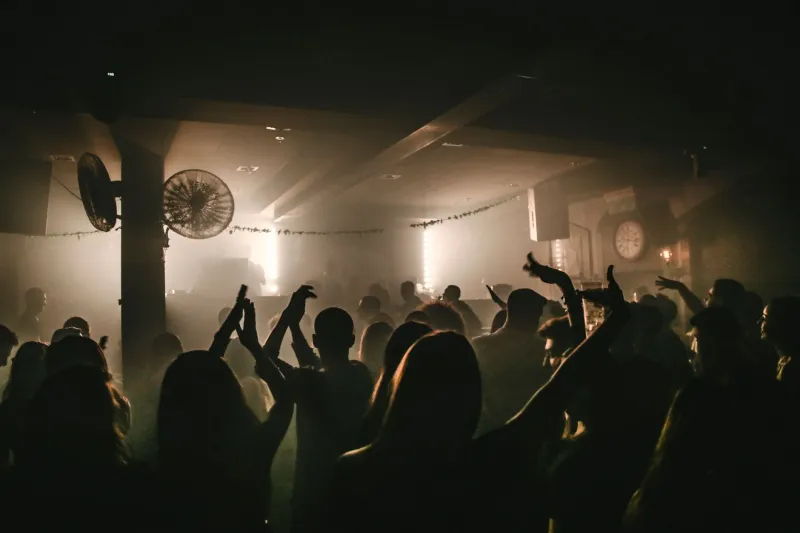
The railway arches in particular have become a kind of after-hours institution. There's something about those spaces — the acoustics, the low ceilings, the sense of being slightly hidden from the rest of the city — that suits the small-hours atmosphere perfectly. When a night is going well in one of those arches at 4AM, there's genuinely nowhere in the country that feels quite like it.
How Birmingham Differs From London
The comparison to London comes up constantly in these conversations, and it's usually made to make a point about what Birmingham does differently — and, the argument goes, better.
London's after-hours scene is vast, yes, but it's also fragmented and, increasingly, expensive. The cost of running a venue in the capital means that even underground nights often carry premium prices, and the sheer volume of options means crowd loyalty is harder to build. You can go to an after-hours event in East London and be surrounded entirely by people you've never seen before and will never see again.
Birmingham's scene is smaller, but that smallness is a feature rather than a bug. The community is tight enough that you recognise faces. The promoters know their crowd. When something goes wrong — and in any live event world, things go wrong — the networks are close enough that it gets sorted. There's an intimacy to Birmingham's afters culture that the capital, for all its scale, genuinely can't replicate.
There's also a musical specificity to Birmingham's late nights that feels distinct. The city's deep roots in jungle, garage, grime, and UK funky — and the more recent influence of Afrobeats and amapiano — give the best after-hours events here a sonic identity that feels genuinely local rather than imported from somewhere else.
The Regulars
Ask the people who go to these nights what keeps them coming back and the answers are remarkably consistent. It's not just about the music, though the music matters. It's about the feeling of being in a room where everyone has chosen to be there with a particular kind of commitment — where the act of staying out this late is itself a statement of intent.
There's a particular type of night owl that Birmingham's afters scene attracts: curious, unpretentious, broadly unbothered by the idea of watching the sun come up on the way home. They tend to be people who've been around long enough to be selective — who've been to enough disappointing nights to know that the good ones are worth protecting and supporting.
For many of them, the after-hours world is where they've made some of their closest friendships. There's something about the specific conditions of 4AM — the lowered inhibitions, the shared commitment, the fact that the rest of the city is asleep — that accelerates human connection in a way that a standard Saturday night simply doesn't.
Worth Staying Up For
Birmingham's after-hours scene won't be for everyone, and it doesn't want to be. Part of what makes it work is precisely that it asks something of you — a willingness to stay, to commit, to trust that the night has more to give if you're patient enough to let it.
But for those who are willing, what's waiting on the other side of midnight in this city is something genuinely special. A community, a sound, a version of Birmingham that most people never get to see. The city, it turns out, has a whole other life after the last orders bell — and it's been quietly extraordinary for years.