Pints, Legends, and Living History: A Proper Tour of Birmingham's Most Storied Pubs
Pints, Legends, and Living History: A Proper Tour of Birmingham's Most Storied Pubs
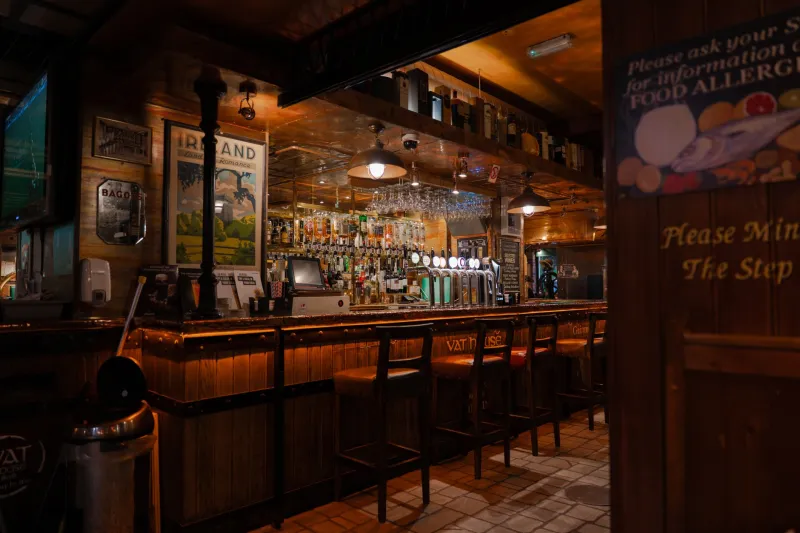
There's a particular kind of magic that happens when you walk into a pub that's been standing longer than your grandparents' grandparents were alive. The ceiling is low. The wood is dark and worn smooth by a century of elbows. The barman pulls your pint with the unhurried confidence of someone who knows this room will still be here long after both of you are gone.
Birmingham has more of these places than most cities give it credit for. Partly because the city's industrial past created an extraordinary demand for drinking establishments — workers needed somewhere to go, and publicans obliged in spectacular fashion. And partly because, despite the best efforts of developers and decades of post-war redevelopment, a remarkable number of those original establishments have survived.
Drinking in them isn't just pleasant. It's genuinely participatory. You're not just having a pint — you're adding yourself to a story that started centuries ago.
The Old Crown, Digbeth: Birmingham's Oldest Surviving Building
Any serious tour of Birmingham's historic pubs starts here, and not just out of convention. The Old Crown in Digbeth is, by most accounts, the oldest surviving secular building in Birmingham — parts of it date back to the late 15th century, which means it was already a going concern when the Tudors were still figuring out the monarchy.
What's remarkable about the Old Crown isn't just its age — it's how stubbornly itself it remains. The timber-framed exterior is genuinely medieval. The interior has been sympathetically maintained rather than sanitised into a heritage theme park. You sit in rooms that have hosted conversations about Reformation politics, Civil War allegiances, and Industrial Revolution ambitions, and the weight of all that accumulated human presence is almost tangible.
The pub's survival through Birmingham's various waves of demolition and redevelopment is itself a story worth knowing. It's been under threat more than once, and the fact that it's still standing — still serving, still drawing in regulars alongside curious visitors — is a minor miracle worth raising a glass to.
The Old Joint Stock, Temple Row: Theatre, Law, and a Bloody Good Pint
The building that houses the Old Joint Stock was originally constructed in the 1860s as a branch of Lloyd's Bank — which tells you everything about the grandeur of its interior before you've even pushed open the door. The domed ceiling, the ornate plasterwork, the sheer scale of the main room: this is a space that was built to impress, and it still does.
The pub's theatrical connection adds another layer. The upstairs venue has been staging productions for years, which means on any given evening you might find yourself sharing bar space with performers running lines, directors nursing a post-rehearsal whisky, or audiences spilling out between acts. It gives the place an energy that feels distinctly Birminghamian — practical and creative at the same time, high culture and working-class hospitality in the same room.
The history of Lloyd's Bank itself is also deeply embedded in Birmingham's commercial story. Sitting in what was once a Victorian banking hall, drinking craft ale beneath a ceiling designed to project financial authority, is one of those quietly surreal experiences the city does particularly well.
The Anchor, Bradford Street: A Pub That Survived Everything
The Anchor is the kind of pub that exists in the shadow of more celebrated venues, known mainly to those who've stumbled upon it and immediately understood what they'd found. It's a Victorian backstreet local that has, against considerable odds, maintained its character through the decades — no gastro-pub makeover, no themed cocktail menu, just a genuinely old Birmingham pub doing what genuinely old Birmingham pubs do.
Its location in the Digbeth-adjacent streets means it sits within walking distance of the city's original industrial heartland. The workers who built Birmingham's canal network, its factories, its railways — many of them would have been regulars here or in pubs exactly like it. There's something quietly profound about that continuity. The faces change, the city transforms around it, but the essential function remains the same.
Locals will tell you the Anchor is at its best on a quiet weekday afternoon, when the light comes through the original windows and the room feels like it's been holding its breath since 1890. We're inclined to agree.
The Wellington, Bennett's Hill: A Real Ale Cathedral
If the Old Crown represents Birmingham's medieval soul and the Old Joint Stock its Victorian ambition, the Wellington represents something slightly different — a pub that has made the deliberate, defiant choice to do one thing extraordinarily well.
With a constantly rotating selection of cask ales that runs to sixteen or more at any given time, the Wellington is effectively a working museum of British brewing culture. But it doesn't feel like a museum. It feels like a pub — argumentative, warm, occasionally chaotic, and staffed by people who know their subject with genuine passion.
The building itself dates back to the 19th century, and the pub's position near the city centre means it's always attracted a gloriously mixed clientele: office workers, students, real ale devotees making pilgrimages from across the country, and bemused tourists who wandered in looking for something familiar and found something far better.
Why It Matters
Birmingham has spent much of its recent history in a complicated relationship with its own past. The post-war redevelopment that reshaped the city centre was, in many ways, a deliberate break with what came before — a city trying to build its way into modernity. Some of what was lost deserved to be mourned. Some of what survived, including these pubs, deserved to be celebrated.
There's a tendency to treat historic pubs as curiosities — places you visit once for the story and then leave in favour of somewhere shinier. But the ones that have genuinely survived, that have real regulars and real character and real wear on their surfaces, resist that framing. They're not museum pieces. They're living venues, still accumulating history, still hosting the conversations and arguments and moments of connection that have always been what pubs are actually for.
Drinking in them is, in a small but genuine way, an act of cultural participation. You're part of the story now. Try to behave accordingly.
A Few Practical Notes for Your Tour
If you're planning a dedicated historical pub crawl through Birmingham, Digbeth is the obvious starting point — the Old Crown anchors the area, and the surrounding streets have enough character to sustain a full evening. The city centre cluster around Bennett's Hill and Temple Row gives you the Wellington and the Old Joint Stock within easy walking distance of each other.
The best time to visit most of these venues is midweek, when the crowds thin out and the rooms return to something closer to their natural state. Weekend visits are perfectly fine, but you'll get more from the experience — more conversation, more atmosphere, more of that particular quiet that old buildings generate — when you've got a bit more space to actually look around.
Bring curiosity. Leave your phone in your pocket occasionally. And for goodness' sake, take your time with the pint.